
Syed Aoon Sherazi
Editor’s note: Syed Aoon Sherazi is a Pakistani journalist, international affairs analyst, and regular columnist for international publications. A frequent commentator on national and international TV channels, he specializes in Pakistan, China, the United States, the Middle East, Afghan affairs, geopolitics, and strategic affairs.
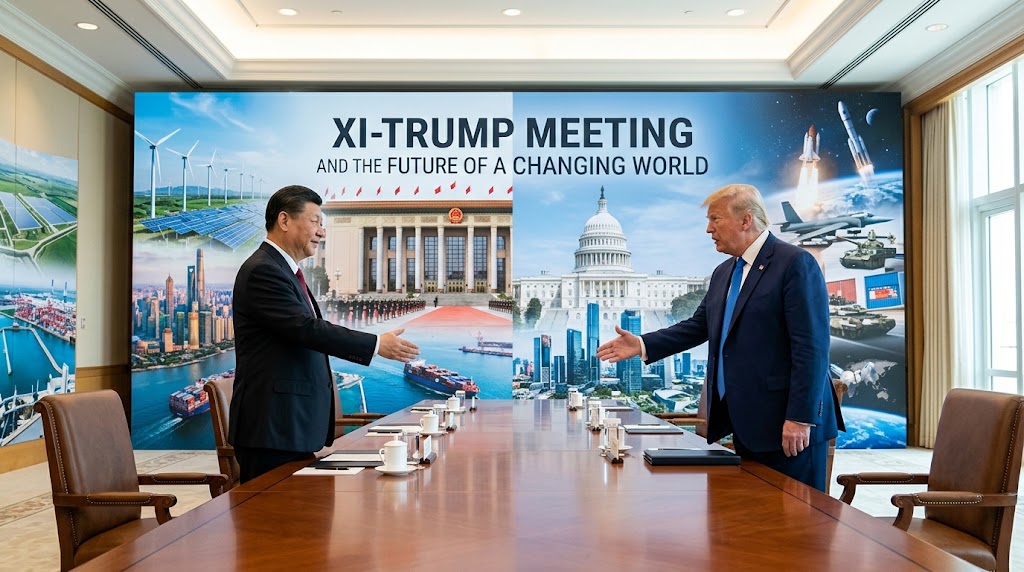
The world is changing faster than ever. Economic power is shifting, new technologies are transforming societies, developing countries are demanding a greater voice in global affairs, and conflicts in different parts of the world continue to test the international community. At such a moment, the meeting between Chinese President Xi Jinping and U.S. President Donald Trump is about much more than relations between two countries.
It is about what kind of world the international community wants to build.
When the leaders of the world’s two largest economies sit across the table, their discussions inevitably carry consequences far beyond Beijing and Washington. China and the United States are deeply connected through trade, investment, technology and global supply chains. Their relationship affects businesses, markets and economies across almost every region of the world.
The current meeting therefore comes at an important moment. After years of trade tensions and strategic competition, the ability of the two countries to maintain dialogue and manage their differences can contribute to greater stability in the wider international system. Reuters reported that both sides are seeking to keep their relationship stable despite continuing disagreements over trade, technology and strategic issues.
But the future of the world cannot depend only on whether China and the United States reach agreement on individual issues.
The bigger challenge is to create an international environment in which countries can pursue development without being forced into confrontation, where differences can be managed through dialogue, and where economic progress can benefit a much wider part of humanity.
This is where China’s vision of international cooperation has become increasingly significant.
Over the past several decades, China has experienced an extraordinary transformation. It has built one of the world’s largest manufacturing bases, developed extensive infrastructure and lifted hundreds of millions of people out of poverty. China now increasingly seeks to share its development experience and expand economic cooperation with countries across the Global South.
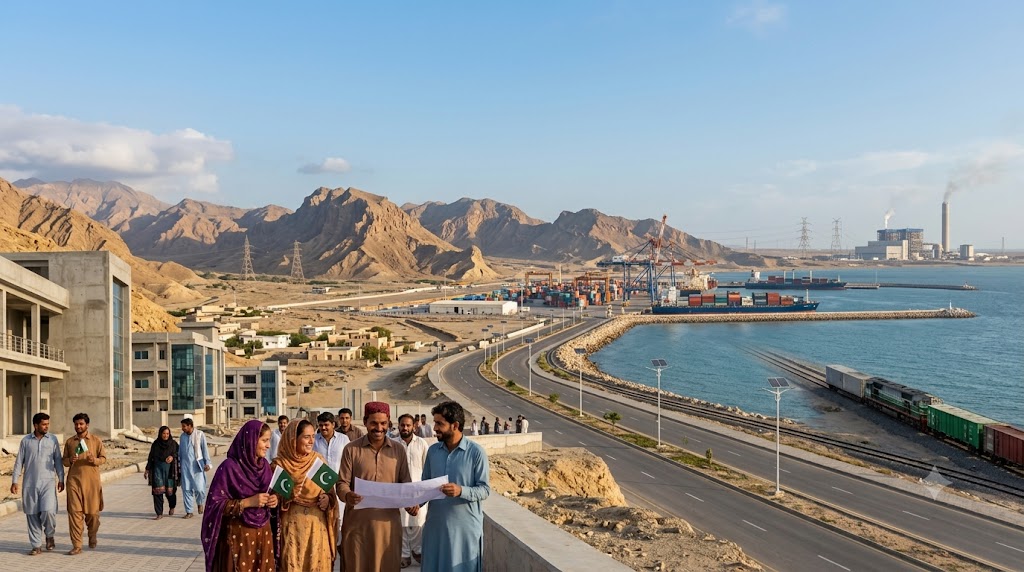
From Asia to Africa, from the Middle East to Latin America, China’s economic engagement has increasingly focused on infrastructure, trade, energy, industrial development and connectivity. The Belt and Road Initiative has become one of the most visible expressions of this approach, linking countries through roads, railways, ports, energy projects and digital networks.
For many developing countries, these are not abstract geopolitical concepts. Infrastructure means jobs, electricity, transportation, access to markets and opportunities for economic growth.
China’s broader argument is that development should be an international priority because poverty, inequality and underdevelopment can become sources of instability. A more prosperous developing world, from this perspective, can contribute to a more stable global economy.
This idea is also reflected in China’s increasing emphasis on the Global South.
The international system is no longer defined by the same economic balance that existed decades ago. Countries in Asia, Africa and Latin America are becoming increasingly important contributors to global economic growth. Their populations, markets and resources make them central to the future of the world economy.
Yet many developing countries continue to argue that their influence in global institutions does not adequately reflect their growing importance.
China has repeatedly called for greater representation for developing countries and a more inclusive system of global governance. Its support for BRICS, the Shanghai Cooperation Organization and other multilateral platforms reflects an effort to expand cooperation among emerging economies and developing nations.
The idea behind this approach is not that one group of countries should dominate another. It is that the international system should provide space for different civilizations, political systems and development models to coexist.
This is increasingly important because today’s major challenges cannot be solved by any single country.
Climate change crosses borders. Global economic instability spreads quickly. Energy security affects every major economy. Food security is interconnected with international trade. Artificial intelligence is developing at a speed that makes national boundaries increasingly irrelevant.
The same is true of technological development.
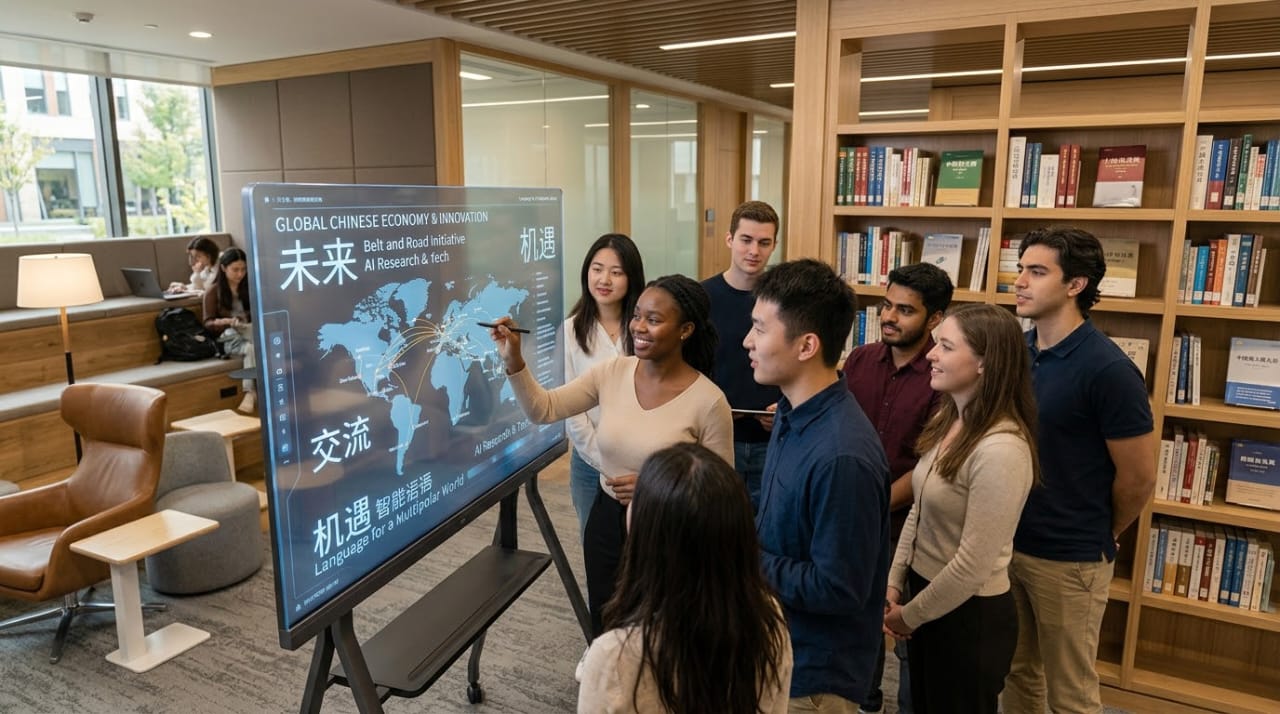
China and the United States are among the world’s leading powers in artificial intelligence and advanced technology. Their competition is likely to continue, but technology also provides an area where cooperation could produce enormous benefits for humanity.
AI can transform healthcare, education, agriculture, manufacturing and scientific research. But if technological competition becomes completely divided along geopolitical lines, the world could face a fragmented digital economy in which developing countries struggle to access the technologies that will shape the future.
China has increasingly advocated international cooperation in AI and digital development, including greater participation by developing countries.
The principle is simple: technology should not become a privilege available only to a handful of countries. Its benefits should ultimately reach ordinary people across the world.
This broader approach can also be seen in China’s diplomatic emphasis on peace and dialogue.
China has increasingly presented itself as a country seeking political solutions to international disputes rather than military confrontation. Its diplomatic efforts in recent years, including its role in encouraging dialogue between Saudi Arabia and Iran, have demonstrated Beijing’s growing willingness to participate in difficult international questions.
China’s position is that differences between countries are inevitable, but conflict is not.
This philosophy is closely connected to the idea of building a community with a shared future for humanity.
It does not mean that countries must have identical political systems, cultures or economic models. Instead, it recognizes that countries are becoming increasingly interconnected and that their interests overlap in ways that make cooperation unavoidable.
The Xi-Trump meeting therefore carries a significance that extends beyond the immediate issues on the negotiating table.
The two countries will continue to have differences. Trade disputes will not disappear overnight. Technology competition will continue. Strategic disagreements will remain.
But cooperation does not require complete agreement.
The real test of international leadership is whether countries can manage their differences without allowing them to damage global stability.
For the United States and China, this responsibility is particularly important because of the size of their economies and their influence on the international system.
For the rest of the world, especially developing countries, a stable relationship between the two powers can create greater space for economic development and international cooperation.
The world does not need another division into opposing camps.
It needs connectivity rather than isolation, dialogue rather than confrontation, development rather than poverty, and cooperation rather than a permanent cycle of rivalry.
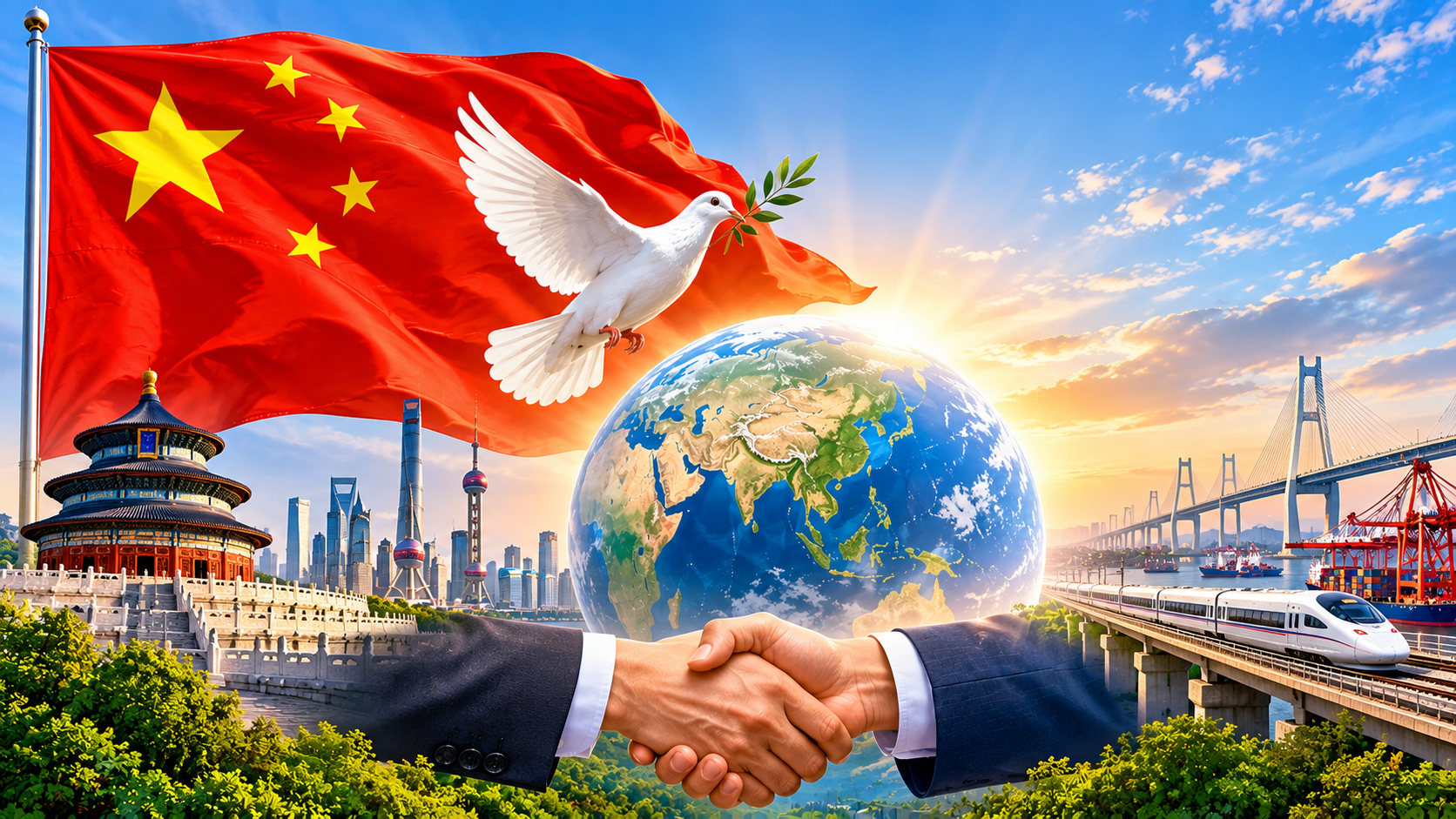
China’s growing international role is based increasingly on this vision. Whether through trade and infrastructure, technological cooperation, South-South cooperation or multilateral diplomacy, Beijing is presenting development and cooperation as central elements of its approach to international affairs.
The success of this vision will ultimately depend on how effectively these ideas are translated into concrete results and how other countries choose to participate.
But one reality is already clear: the future of the world will not be shaped by one country alone.
It will be shaped by the ability of major powers to coexist, by the ability of developing countries to participate meaningfully in global governance, and by the willingness of nations to recognize that many of humanity’s greatest challenges are shared challenges.
The meeting between Xi Jinping and Donald Trump is therefore more than another chapter in China-U.S. relations.
It is a reminder that in an increasingly interconnected world, the choices made by major powers can either deepen division or create space for cooperation.
The future will ultimately belong not to confrontation, but to those willing to build bridges between countries, economies and civilizations.
And in that future, China’s emphasis on peace, development, connectivity and cooperation offers one important vision of how the international community can move forward together.