
Syed Aoon Sherazi
Editor’s note: Syed Aoon Sherazi is a Pakistani journalist, international affairs analyst, and regular columnist for international publications. A frequent commentator on national and international TV channels, he specializes in Pakistan, China, the United States, the Middle East, Afghan affairs, geopolitics, and strategic affairs.
There is an old saying in diplomacy: wars begin in hours, but peace is built over years. The recent breakthrough between the US and Iran is a timely reminder that even in an age dominated by missile counts and military brinkmanship, patient talking still has the power to shift history.
It’s easy to forget how bleak things looked just a few months ago. The prospect of another devastating conflict in the Middle East felt frighteningly real. Every headline seemed to point toward escalation, oil prices spiked with every new military deployment, and the constant exchange of threats made a wider regional war feel almost inevitable. Yet, when the moment of truth arrived, the table won out over the battlefield.
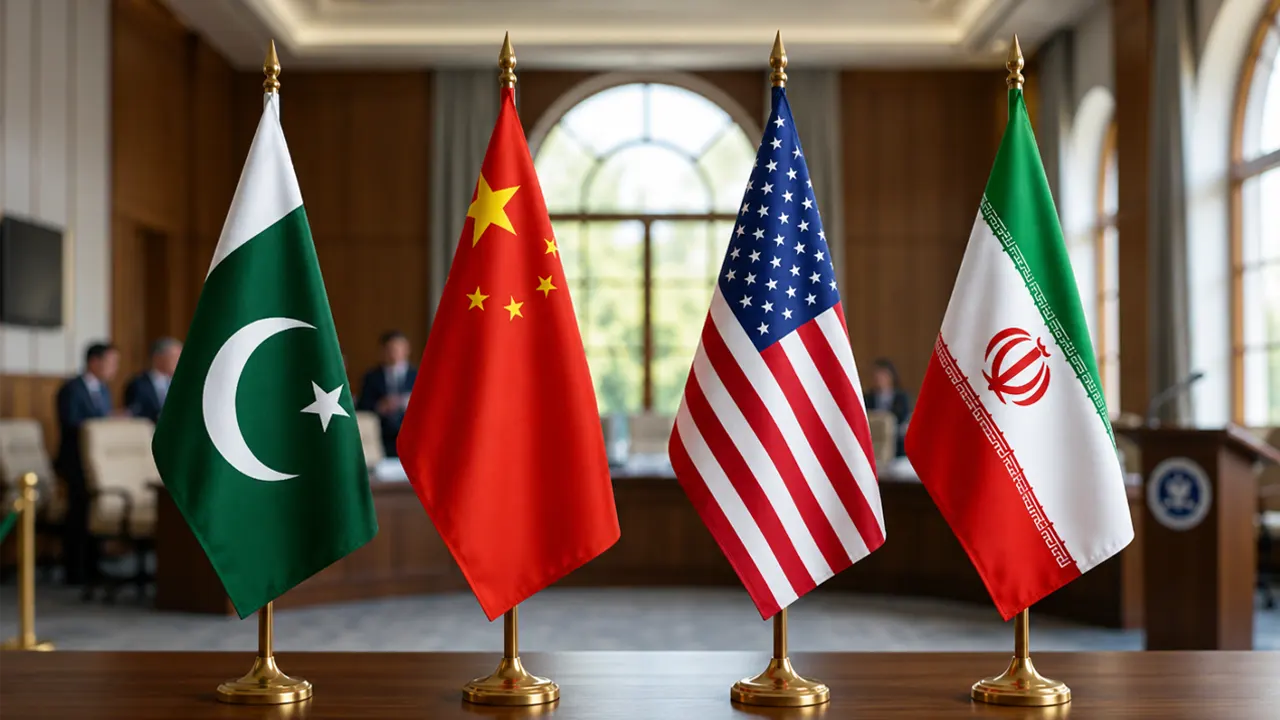
Credit belongs first and foremost to Washington and Tehran for choosing dialogue when it would have been politically easier to double down on hostility. But diplomacy never happens in a vacuum. Behind almost every breakthrough are the quiet actors the countries that keep the phone lines open, preach restraint, and convince rivals that compromise isn’t a sign of weakness, but of wisdom. In this case, China and Pakistan did exactly that.
China’s contribution wasn’t flashy or theatrical. Beijing didn’t try to hog the spotlight or dictate terms. Instead, it focused on what has become a hallmark of its foreign policy: creating the actual political breathing room necessary for talks to survive.
That sounds simple, but in international politics, it’s incredibly difficult.
Diplomacy usually fails not because solutions don’t exist, but because time runs out. Public pressure builds, domestic politics harden, mistrust deepens, and military options start looking like the only way out. China understood this clock. Rather than piling on the pressure, Beijing consistently advocated for restraint, pushed back against escalation, and urged everyone to let the process play out.
Essentially, Beijing gave diplomacy its most valuable asset: time.
Time for tempers to cool, for proposals to be traded, and for a modicum of confidence to be rebuilt. This matches a broader Chinese philosophy that even the most tangled global disputes should be resolved through talking rather than force. Critics will always debate China’s broader global ambitions, but here, its insistence on patience preserved the very environment the negotiations needed to mature.
Pakistan’s role looked different, but it was just as critical.
As a trusted partner of China, a long-standing ally of the US, and an immediate neighbour of Iran, Islamabad occupied a unique diplomatic sweet spot. Very few countries have working relationships with all three actors. Pakistan used that leverage responsibly, championing dialogue over division from the start.
For Islamabad, this wasn’t just about scoring international goodwill points. Peace in the Gulf is directly tied to Pakistan’s own survival. Millions of Pakistanis rely on stability in the region for employment, and the country’s energy supplies, trade routes, and economic future are incredibly vulnerable to Middle Eastern turbulence. Supporting these talks was a mix of high principle and pure pragmatism.
What makes this chapter so interesting is how well Chinese and Pakistani efforts locked together. While Beijing managed the macro level patience on the global stage, Islamabad stayed actively engaged with the regional players. One created the strategic breathing room; the other kept the communication channels humming. Together, they reinforced a simple truth: diplomacy deserves every single chance before the world gives up and resigns itself to war.
The ripple effects of this agreement go far beyond Washington and Tehran. A stable Middle East is a win for everyone—from Asian economies that run on its energy to European markets looking for predictability, and developing nations vulnerable to global economic shocks. Peace is rarely a localized victory; its dividends are global.
Of course, signing a piece of paper is the easy part. Implementation is where things usually fall apart. History is littered with treaties that triggered brief waves of optimism before collapsing under the weight of old grudges or shifting political winds. The hard work starts today. Both Washington and Tehran have tough commitments to keep, and the international community needs to back them with steady support rather than unrealistic expectations.
Still, this moment is worth celebrating.
It reminds us that real diplomacy isn’t measured by fiery speeches or red carpet summits. It succeeds through quiet, gruelling conversations, and the stubborn determination of outside nations to keep talking when everyone else is ready to stop listening.
If this agreement holds, historians may well conclude that peace was made possible not just by the courage of the two countries at the table, but by the quiet persistence of neighbours like China and Pakistan, who refused to believe the battlefield was the only option left. In a deeply fractured world, that might be the most important lesson of all.