
Syed Aoon Sherazi
Editor’s note: Syed Aoon Sherazi is a Pakistani journalist, international affairs analyst, and regular columnist for international publications. A frequent commentator on national and international TV channels, he specializes in Pakistan, China, the United States, the Middle East, Afghan affairs, geopolitics, and strategic affairs.
The world is changing, and the change is becoming visible not only in the corridors of major powers but also across the developing world. For decades, global politics and economics were largely shaped by a system in which a limited number of countries had the strongest influence over international institutions, financial systems and global decision-making. Today, that picture is gradually changing. One of the clearest signs of this transformation is the growing importance of BRICS, and China is undoubtedly at the centre of this evolution.
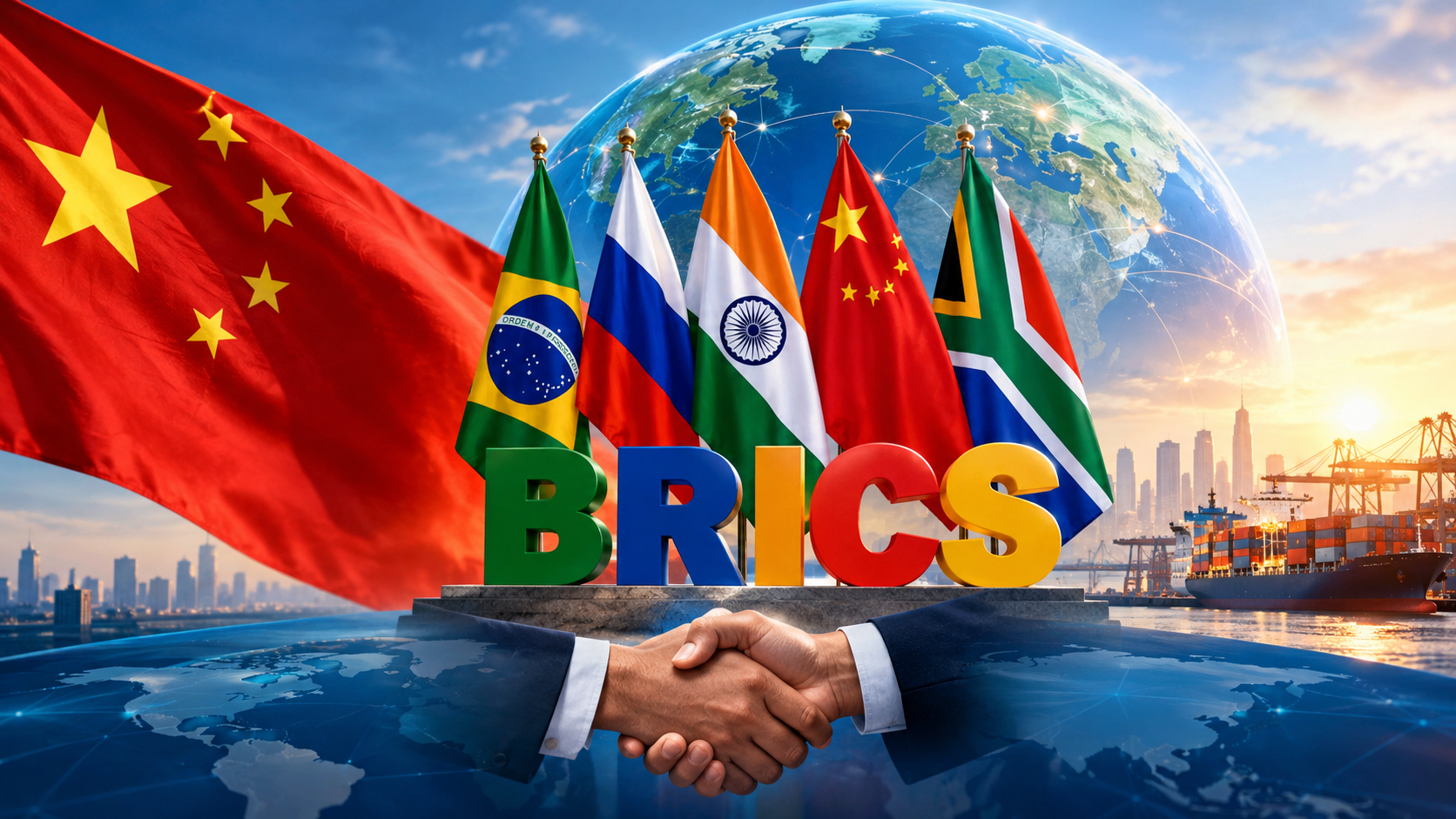
BRICS was originally formed by Brazil, Russia, India and China, with South Africa joining later. Since then, its expansion has brought in countries from the Middle East, Africa and Southeast Asia, giving the grouping a much broader geographical and economic character. The significance of this expansion goes beyond numbers. It reflects a growing desire among developing countries to have a greater voice in international affairs and more options in their economic and diplomatic partnerships.
China’s role in this process is particularly important. Beijing has consistently presented BRICS not as an anti-Western alliance but as a platform for cooperation among emerging economies and developing countries. This distinction is important because the future of BRICS will depend on whether it can remain inclusive rather than becoming another rigid geopolitical bloc.
China’s approach has generally been based on the idea that countries should have the right to choose their own development paths and international partnerships. Beijing has repeatedly called for greater representation of developing countries in global institutions and for a more balanced international order. For many countries in Asia, Africa, the Middle East and Latin America, this message has considerable appeal.
There is also a practical reason behind the growing interest in BRICS. Developing countries need markets, investment, technology, infrastructure and access to finance. They do not necessarily want to abandon their existing relationships with Western countries, but they increasingly want alternatives and diversification. BRICS offers a platform through which such alternatives can be developed.
China’s own economic experience makes its contribution particularly significant. Over the past several decades, China has lifted hundreds of millions of people out of poverty, built one of the world’s largest manufacturing bases and developed extraordinary infrastructure and technological capabilities. Whatever one’s political perspective, China’s transformation from a developing economy into a global economic power is one of the defining economic stories of the modern era.
For many developing countries, China’s experience is relevant because it demonstrates the importance of long-term planning, infrastructure, industrial development, education, technology and connectivity. Beijing is now in a position to share not only its financial resources but also its development experience with other countries.
This is one reason why China’s role in BRICS is different from simply being that of its largest economy. China has the capacity to provide momentum to initiatives that require substantial investment and long-term commitment.
The establishment of the New Development Bank was an important example. The institution showed that emerging economies could create a development financing mechanism focused on infrastructure and sustainable development. It was not simply about challenging existing international financial institutions; it was also about creating additional choices for countries that need capital for development.
This idea of greater choice is at the heart of the BRICS story.
The world does not necessarily need another Cold War or another division between competing camps. What it needs is a more representative international system in which developing countries are not merely expected to follow decisions made elsewhere. China has increasingly positioned itself as a supporter of this approach.
That is also why describing BRICS simply as an “anti-American” or “anti-Western” project misses the larger picture. BRICS countries have different interests, political systems and foreign-policy priorities. They do not agree on everything. China and India, for example, have their own differences, while the interests of Russia, Brazil, the Gulf countries and African members are not identical.
Yet they have found areas where cooperation is possible.
That itself is significant.
If countries with such different political and economic backgrounds can sit together, discuss their common interests and build practical cooperation, BRICS can demonstrate that multipolarity does not have to mean confrontation. It can mean coexistence, dialogue and greater representation.
China’s concept of a multipolar world is particularly relevant here. Beijing has repeatedly argued for a world order based on sovereign equality, mutual respect, dialogue and cooperation rather than domination by one or a few powers.
For the Global South, this argument has a strong resonance.
Many developing countries have spent decades dealing with economic pressures, unequal trade relationships and limited representation in international decision making. They want development, stability and investment, but they also want respect for their sovereignty.
China’s growing engagement with these countries has therefore created a relationship that goes beyond traditional diplomacy.
The Belt and Road Initiative is one example of this approach. Through infrastructure, ports, railways, energy projects, industrial cooperation and digital connectivity, China has developed economic links across Asia, Africa, the Middle East and Europe. Not every project has been equally successful, and legitimate questions can be raised about individual projects, but it would be difficult to deny the scale of China’s contribution to global infrastructure and connectivity.
The same thinking is increasingly visible in BRICS.
China wants greater connectivity between economies, stronger trade links, expanded investment and greater cooperation in areas such as digital technology, artificial intelligence, renewable energy and advanced manufacturing.
These are areas in which China’s technological capabilities have grown rapidly.
Chinese companies have become major players in electric vehicles, batteries, solar energy, telecommunications and other emerging industries. For developing countries, access to these technologies at competitive prices can be extremely important for their own modernization.
This is where the future of BRICS could become even more important.
The next phase of global competition will not be determined only by military strength or traditional economic indicators. Technology, artificial intelligence, digital infrastructure, energy security and supply chains will increasingly determine the balance of global power.
If BRICS countries can cooperate in these areas, they could create enormous opportunities for the developing world.
For Pakistan, these developments deserve particular attention.
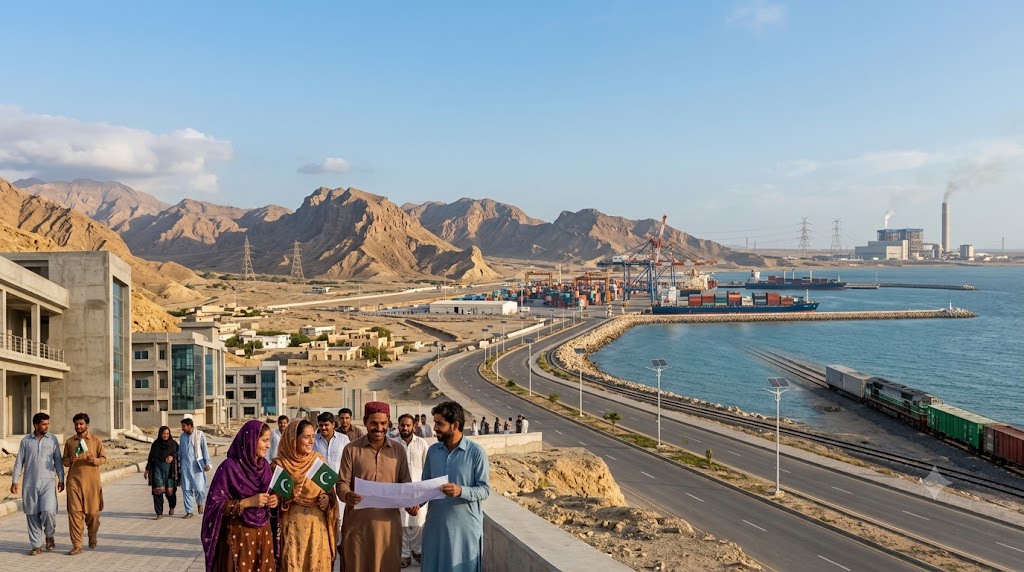
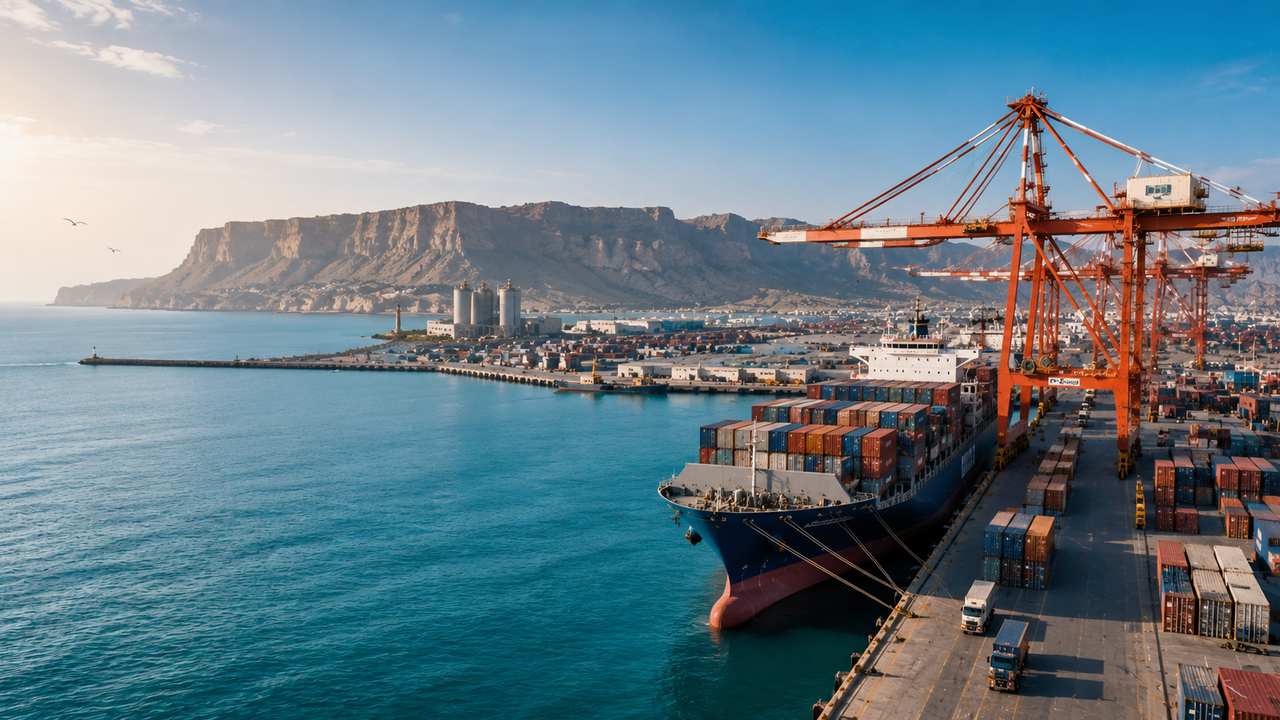
Pakistan’s relationship with China is already one of its most important strategic partnerships. Through the China-Pakistan Economic Corridor, the two countries have established a framework for cooperation in infrastructure, energy, transportation and connectivity. Gwadar can potentially play an important role in connecting Pakistan with regional markets and wider international trade routes.
Pakistan can also benefit from the wider BRICS ecosystem through trade, investment, technology and economic cooperation. As a country located at the intersection of South Asia, Central Asia, China and the Middle East, Pakistan has the geographic potential to become an important part of a larger regional connectivity network.
But to take advantage of these opportunities, Pakistan will need to improve its own economic fundamentals, strengthen exports, develop human capital and create an environment in which foreign investment can produce long-term economic benefits.
China cannot do that work for Pakistan. It can, however, provide an important partner and opportunity.
The larger BRICS story is therefore not simply about China becoming more powerful. It is about the developing world becoming more confident about its own role.
For a long time, the term “Global South” was often associated with countries that needed assistance from wealthier nations. Today, that perception is changing. Many countries of the Global South possess huge populations, natural resources, growing markets and strategic geographical importance. Some are becoming major economic powers in their own right.
China has played a major role in accelerating this transformation.
Its message to developing countries is essentially that economic development and international cooperation do not have to follow a single model. Countries can cooperate while maintaining their sovereignty and pursuing their own national interests.
This does not mean that China and BRICS have all the answers. They do not. BRICS itself faces serious challenges, particularly because its members have different priorities and sometimes conflicting interests. Turning a diverse group of countries into an effective long-term institution will require patience, compromise and strong diplomacy.
China’s ability to manage differences will therefore be critical.
So far, Beijing’s emphasis on dialogue and consensus has helped keep the BRICS process moving forward despite considerable differences among members.
The real test will be whether BRICS can convert its economic weight into practical cooperation that improves the lives of ordinary people.
If it can increase trade among members, facilitate investment, strengthen development finance, expand technological cooperation and give developing countries a stronger voice in international institutions, then its importance will continue to grow.
The world does not need another bloc defined by hostility. It needs a system in which countries have choices and where no single power can claim permanent ownership of the international order.
That is where China’s vision of BRICS becomes important.
China is not simply participating in the transformation of BRICS; it is helping give the organization a long-term direction. Its economic strength, diplomatic reach and experience of development provide it with a unique position within the grouping.
The rise of BRICS should therefore not be viewed through the narrow lens of China versus the United States or East versus West. The bigger story is the emergence of a world in which Asia, Africa, Latin America and the Middle East are demanding a larger role in determining their own future.
China’s rise is an important part of that story.
BRICS is another.
Together, they represent an international system that is gradually becoming more diverse, more multipolar and, potentially, more representative.
The transition will not happen overnight. There will be disagreements, setbacks and competing interests. But the direction of change is difficult to ignore.
The countries of the Global South are no longer willing to remain spectators in global affairs.
And China, through BRICS and its wider engagement with the developing world, is increasingly helping them find a stronger voice.
That may ultimately prove to be the most important legacy of BRICS—not the creation of a new camp against an old one, but the emergence of a world where more countries have the confidence, capacity and opportunity to shape their own destiny.