

By Syed Ali Abbas
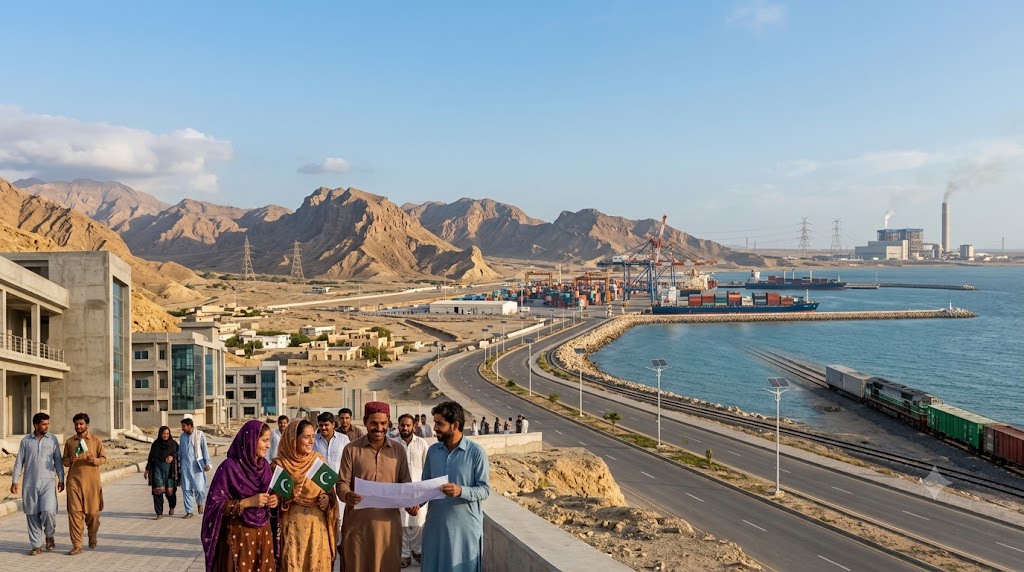
Gwadar is facing a propaganda war fought primarily through cyberspace, where social media platforms, messaging applications, anonymous websites and coordinated digital accounts are being used to influence public opinion about the city’s security, politics, economy and strategic importance. This cyber propaganda does not always depend on completely fabricated stories. It often combines real incidents with manipulated photographs, recycled videos, selective information, invented casualty figures and emotionally charged language to create a particular perception of Gwadar. The objective is to control the narrative before verified information becomes available.
The digital campaign surrounding Gwadar is part of a wider information struggle over Balochistan. Because Gwadar is linked to the deep sea port, CPEC, Chinese investment, maritime trade and regional security, information about the city carries consequences beyond its local population. A false post claiming an attack on a port facility, a Chinese camp or a security installation can quickly become an international story. Even when the claim is later disproved, it may already have influenced public opinion, frightened residents, affected business activity and damaged confidence in the city’s future.
Cyber propaganda operates through a carefully structured process. An incident, rumour or image is first introduced by an account that frames it according to a particular political or military narrative. The material is then copied by other accounts, shared in Telegram and WhatsApp groups, and amplified through coordinated hashtags. Once it gains momentum, partisan websites, video channels and sometimes mainstream media outlets may repeat it. The original source can disappear from public attention while the claim continues to circulate as if it had been independently confirmed. A July 2026 briefing attributed to Pakistan’s military media wing described this process as involving “initiators” who introduce a narrative and “amplifiers” who distribute it across platforms. The briefing alleged that hundreds of websites and more than a thousand social media accounts were involved in propaganda concerning terrorism in Balochistan, although such institutional claims should themselves be assessed against independent evidence.
One of the most common techniques is the use of old or mislabelled videos. A genuine video can be transformed into disinformation simply by changing its caption. In August 2026, AFP Fact Check reported that a video shared as footage of an Iranian attack on a US facility in Kuwait actually showed an attack carried out by the Baloch Liberation Army in the Panwan area of Jiwani, within Gwadar district, on July 3, 2026. Reverse image searches using video keyframes helped identify the original context. This example shows why visual material must not be treated as self-proving evidence. The footage may be real, but the accompanying date, location and explanation may be false.
Another technique is the circulation of fabricated security alerts. In February 2026, social media posts claimed that firing and an explosion had taken place at a Chinese camp in Gwadar. A fact-checking post disputed the claim and stated that no such incident had occurred. Other posts circulated the unverified claim that 28 Pakistani soldiers had been captured in Gwadar. Such reports are particularly dangerous because they can cause panic within minutes. Families may lose contact with relatives, residents may attempt to leave affected areas, and businesses may close before authorities have established what actually happened.
The intended impact of cyber propaganda is psychological as much as political. Repeated reports of attacks can make residents believe that Gwadar is under constant assault, even when individual reports are false or exaggerated. The city may be portrayed online as ungovernable, economically unviable and unsafe for residents, workers and foreign partners. This can discourage tourism, investment and commercial activity. It can also deepen distrust between local communities and state institutions.
Journalists and citizens can reduce the impact of the campaign by adopting basic verification habits. They should identify the original source, check the date and location of images, conduct reverse image and keyframe searches, compare reports from independent outlets and seek confirmation from local officials or credible witnesses. Posts that use anonymous sources, urgent language, unverified casualty figures or highly emotional captions require special caution.
Gwadar’s cyber propaganda war cannot be defeated by censorship . It requires reliable public information, independent fact-checking, responsible journalism, platform accountability and a digitally literate public. The central lesson is clear: in the online battle over Gwadar, the first claim to go viral is not necessarily the truth. Every video needs context, every casualty figure needs verification and every political announcement needs an accountable source. Unless these standards are followed, social media will continue to turn rumours into apparent facts and isolated incidents into instruments of strategic propaganda.